Techview thegamearchives: The Ultimate Deep Dive into Gaming & Technology
The worlds of technology and gaming have never been more intertwined, and at the crossroads stands Techview thegamearchives: a conceptual hub where innovation meets nostalgia, analysis meets enthusiasm, and future trends meet historical archives. Whether you’re a hardcore gamer, a tech enthusiast, or simply curious about how gaming culture has evolved alongside rapid technological growth, this article unpacks everything you need to know in a compelling, conversational, expert tone.
In this comprehensive exploration, we’ll dive into the origins, evolution, significance, and future potential of Techview thegamearchives. You’ll get thoughtful insights on how gaming culture is documented and analyzed, how technology shapes gaming experiences today, and why platforms like this matter more than ever in an age driven by digital content and immersive entertainment. Buckle up — we’re going deep.
1. What Is Techview thegamearchives? Breaking Down the Concept
At its core, Techview thegamearchives represents the fusion of thorough tech analysis with the documentation of video game history. It’s not just a collection of articles — it’s a philosophy. The idea is grounded in the belief that video games are cultural artifacts deserving the same attention and archival care as movies, books, and music.
But what exactly does that mean in practice? Imagine a platform that doesn’t just review the latest tech gadgets or the newest AAA game release. Instead, Techview thegamearchives places equal emphasis on the structural development of gaming technologies, the artistic narratives behind classic titles, and the social impact games have had on generations. This holistic mindset sets it apart from typical gaming blogs or tech news outlets.
More than anything, it’s meant for thinkers — people who enjoy going beyond gameplay footage and checklists of specs. It’s for those who ask questions like: “Why did this console change the industry?”, “How did early hardware limitations influence game design?”, and “What can today’s creators learn from gaming history?” In answering these questions, Techview thegamearchives becomes a bridge between eras, trends, and communities.
2. A Brief History of Gaming Documentation: How We Got Here
To appreciate why something like Techview thegamearchives makes sense today, we need to rewind and look at how gaming culture has historically been documented. In the early days of video games — the 70s, 80s, and early 90s — documentation was sparse and often scattered. Fans shared knowledge through magazine columns, local gaming clubs, and word of mouth. Serious discussions about game mechanics or cultural context were rare.
As gaming gained mainstream traction in the late 90s and early 2000s, dedicated websites and forums began to flourish. IGN, GameSpot, NeoGAF, and other platforms became early hubs for reviews, news, and debate. Still, most of these outlets operated within specific silos: hardware reviews here, game walkthroughs there, and opinion forums somewhere else entirely. The bigger contextual picture was often lost.
It wasn’t until later in the mid‑2010s — with the rise of YouTube documentaries, long‑form essays, and academic interest in gaming culture — that in‑depth documentation started gaining recognition. Suddenly, there was demand for historical retrospectives, developer interviews focused on craft instead of hype, and analytical pieces on how technology influenced design. Techview thegamearchives stands on the shoulders of this evolution. It represents the culmination of fragmented gaming knowledge into a unified ecosystem where context matters as much as content.
3. Why Techview thegamearchives Matters in Today’s Digital World
We live in a time when technology evolves at breathtaking speed and gaming is one of the most influential entertainment mediums globally. But speed often comes at a price: forgetting the past while chasing the future. That’s where Techview thegamearchives plays a crucial role. It’s more than nostalgia — it’s preservation.
Think about the early consoles — the original Nintendo Entertainment System (NES), the Sega Genesis, the Atari 2600. Many of these platforms shaped not just hardware engineering, but also how storytelling, challenge, and interactivity evolved. Yet without proper documentation, their significance becomes buried under new releases and marketing cycles. Techview thegamearchives acknowledges that understanding history allows us to predict trends, innovate consciously, and honor creators whose work laid the foundation for today’s experiences.
In addition, as esports, virtual reality (VR), blockchain gaming, and cloud platforms gain momentum, Techview thegamearchives helps evaluate these trends objectively. Rather than simply amplifying buzzwords, it asks: Is this genuinely transformative? Does it build on past innovation or cycle through old ideas repackaged? This level of analytical integrity is rare but essential in a digital age where hype can easily eclipse substance.
4. The Intersection of Technology & Gaming: A Symbiotic Relationship
Gaming has always been a technology‑driven medium. At the dawn of video games, engineers and programmers were inventors by necessity. Limited memory meant inventive compression techniques. Primitive graphics hardware spawned style choices that became artistic movements in their own right. Every technical limitation was also a creative opportunity.
This symbiotic relationship continues today. Take the modern gaming landscape: ultra‑realistic rendering engines like Unreal and Unity, ray tracing powered by cutting‑edge GPUs, immersive soundscapes supported by spatial audio, and cloud platforms enabling play on devices that aren’t traditionally gaming hardware. Gaming pushes tech forward just as much as tech enables new gaming experiences.
Techview thegamearchives captures this relationship by reviewing not just what innovations exist, but why they matter. For instance, the shift toward machine learning and AI doesn’t just influence NPC behaviors — it impacts accessibility tools, procedural content generation, and user‑centric experiences in unprecedented ways. Rather than observing technology change in isolation, this platform analyzes its impact on play, culture, and community.
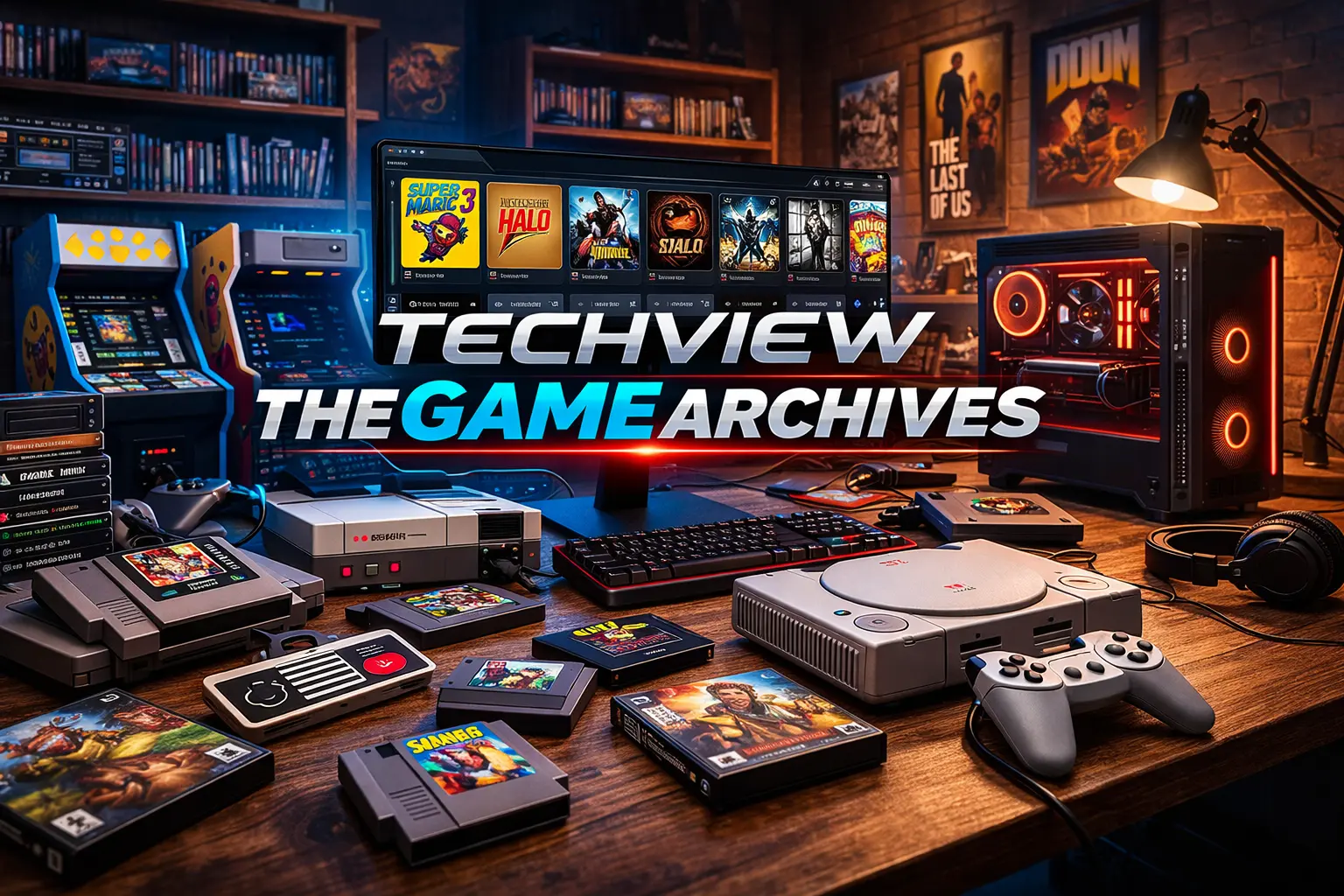
5. Archiving Gaming History: Beyond Playthroughs & Reviews
When most people think of gaming content online, they picture walk‑throughs, Let’s Plays, speedruns, and review scores. These formats are useful, but they scratch the surface. Archival work — the kind Techview thegamearchives champions — goes deeper into context and relevance.
True game archival involves multiple layers:
-
Technical Layers – Capturing hardware specs, platform architecture, development tool kits, and software engineering milestones that shaped performance.
-
Cultural Layers – Documenting how communities formed around games, how they influenced trends, and how game narratives reflected or challenged societal norms.
-
Historical Layers – Placing titles and technologies in a chronological timeline that highlights progression, regression, disruption, and reinvention.
This comprehensive approach ensures games are not just remembered, but understood. The more we document with depth and clarity, the less likely important breakthroughs or influential creators are forgotten as time marches forward. It transforms gaming from disposable entertainment into documented cultural legacy.
6. How Techview thegamearchives Approaches Content: Methodology & Vision
What sets Techview thegamearchives apart from typical tech or gaming blogs? It comes down to its methodology — a blend of critical analysis, historical narrative, and forward‑thinking insight.
First, every piece starts with research integrity. Instead of relying solely on press releases or surface‑level impressions, thoughtful analysis demands engagement with developer interviews, original source material, hardware teardown data, and community testimonials. This gives articles substance beyond quick opinions.
Next, context is prioritized over chronology. Instead of simply listing events in order, material is woven into narratives that highlight cause and effect. For example, explaining how the rise of affordable 3D graphics hardware not only advanced visuals but also shifted entire genres of gameplay and storytelling.
Finally, the vision is inclusive. While retro gaming and modern AAA titles receive attention, so do indie games, mobile breakthroughs, and peripheral technologies that often fly under the radar. By embracing plurality, Techview thegamearchives paints a richer, more representative picture of gaming’s past and its future potential.
7. Iconic Games & Technologies Every Archive Should Highlight
In any credible archive of gaming history, some titles and technologies inevitably deserve special attention — either because they introduced innovation, marked cultural shifts, or became iconic in ways that shaped the industry. A few standout examples include:
-
The Original Super Mario Bros. Franchise – A foundational title that defined platforming mechanics and player expectations.
-
Early 3D Engines – Technologies like the Quake engine changed how worlds were built and explored.
-
Online Multiplayer Systems – Games like Ultima Online and EverQuest helped define persistent worlds and social gameplay before modern MMORPGs.
-
Handheld Revolution – Platforms like the Game Boy proved gaming isn’t bound to living rooms.
-
Virtual Reality Platforms – From niche beginnings to mainstream experimentation, VR systems illustrate how emerging tech reshapes immersion.
Each of these entries represents more than just a product — they serve as milestones in how gaming expanded as both technology and cultural expression. Techview thegamearchives places narratives like these into context with careful analysis and storytelling.